It has been a while since I last wrote. A new semester started, and sophomore life has been busier than I expected. Classes picked up fast, activities started again, and our investment club launched another competition. This time, each of us was given $100,000 of virtual money, instead of the $10,000 from last semester. We had tenfold the potential to gain money, but also to lose money. This was turning out to be a lot more interesting than before.
Coming into this semester, I felt confident. Last semester ended well, and I thought I had learned how to stay disciplined. Then the market reminded me how quickly confidence can turn into pressure.
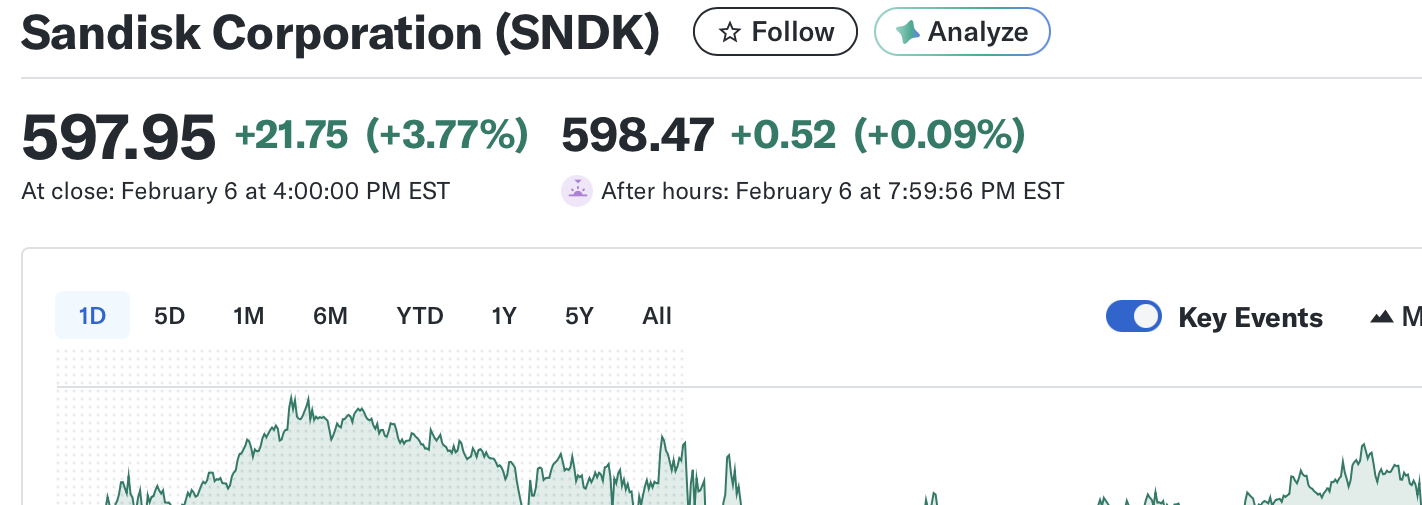
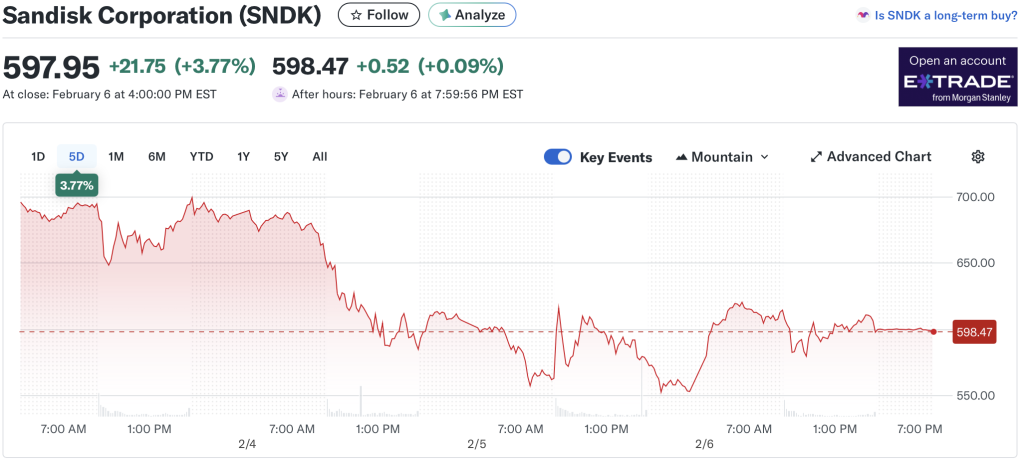
About one month ago, I bought Sandisk at $190 and sold at $210. At the time, it felt like a reasonable decision. I followed my rules and moved on. But then I watched the same stock climb all the way to $700. That number stuck in my head more than I wanted to admit. That was when FOMO started creeping in.
At the same time, I was watching what other members in the investment club were doing. Some were basically gambling on penny stocks. One of them doubled their portfolios in just one week. What a foolish investment strategy, I thought. Risking your portfolio based on your feelings is not a good strategy.
Then I had a realization–I was no different.
The only difference was that I was doing it with a strong tech stock instead of a penny stock, the behavior was the same. Chasing price, reacting emotionally, ignoring my own rules. I judged risky behavior in others while doing a “better version” of the same thing myself.
As Sandisk kept rising, I broke my rules without even noticing. I jumped back in because it felt like everyone else was making money without me. A few days later, the market crashed. Fear took over and I sold. Then it bounced almost immediately, and I bought again. I repeated this cycle more than once. Buying near the top, and selling during the drop.
The feeling after selling was the worst part. Watching a stock I just sold take off without hesitation created a level of FOMO that is hard to describe. It felt like the market was moving on without me. I could not stop watching the chart, and every green candle felt like a personal mistake.
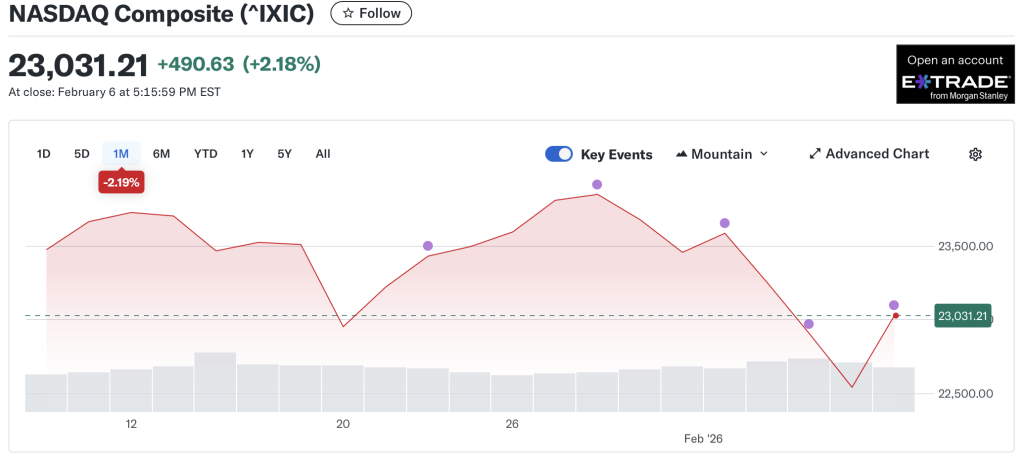
Shown in the 1-month chart of NASDAQ, it has fallen due to investor behavior. After the NASDAQ’s increase thanks to the AI boom, it has fell down back to $23,000, due to investors believing that it has increased too much and no more profits will be made out of tech stocks due to the AI bubble.
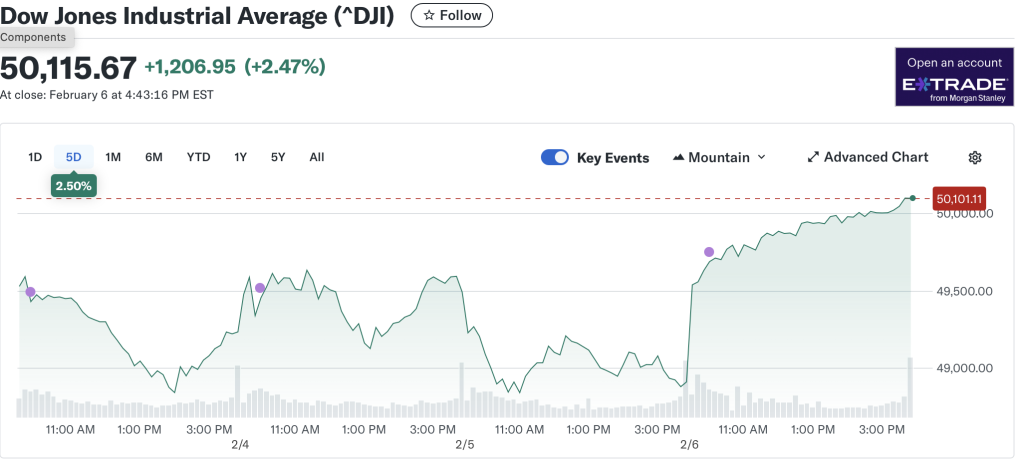
Compared to NASDAQ, DJI(5day chart) has reached an all time high in the $50,000 range. This taught me that having a truly mixed portfolio with technology shares and industrial shares are the way to go. NASDAQ comprised of tech stocks that tend to be very volatile, while DJI has industrial stocks that are stable. A portfolio should not rely too much on tech stocks, but have industrial stocks as well.
What made it worse was knowing exactly what I did wrong. I did not follow my own rules about scaling in or scaling out. I did not spread my entries or exits. I went all in emotionally, and then all out emotionally. Breaking those rules created more regret than the actual loss itself.
All of this happened while the broader market was acting just as extreme. We saw a sharp drop that scared a lot of people. Then, in just a few days, the market rebounded aggressively. Some indexes reached historic levels. Watching prices crash and then recover that fast was shocking. It showed me how quickly sentiment can flip and how dangerous it is to react emotionally instead of thinking clearly.
This experience forced me to admit something important. My success last semester does not protect me from mistakes this semester, the stock market is way too unpredictable. Winning once does not make me immune to FOMO. If anything, it might make it worse.
This was not a mistake caused by lack of knowledge. It was caused by lack of discipline. And that might be the harder lesson to learn. Investing in the stock market is 30% financial, economic, and political knowledge, and 70% discipline in behavior. Stay consistent.
What I learned
- FOMO can break rules faster than bad analysis
- Good companies can still turn into bad trades
- Virtual money makes risky behavior feel easier
- Market moves faster than emotions can handle
- Not following scaling rules increases regret more than losses
- Always diversify your stocks, do not put all your eggs in the same basket
- Sell and buy shares by increments, refrain from selling all or buying a lot.
I am still learning. This semester just started, and I already know it will test me in different ways than the last one did. If last semester taught me how the market works, this one is teaching me how my own mind works.
The question is not whether FOMO will show up again. It will.
The real question is whether I will recognize it in time next time.
Leave a Reply